

WTC 7
I'm starting to assemble evidence regarding the collapse of WTC 7. This is a work in progress. I'm not going to get into any extensive structural analysis focusing on the column structure of the building; I'm not an engineer and unlike a lot of the folks in the 9-11 "Truth" movement I'm not going to play one on the Internet.
First, let's take a look at WTC 7 as it looked prior to 9-11:

This shows the relative locations of the buildings:

When you hear that they were 300 feet apart, that sounds like quite a ways, until you remember how immense these buildings were. This photo (from the South Tower) should give you a better idea of the proximity:

How was the building damaged?
It was damaged largely by the collapse of World Trade Center 1 (the North Tower).
Was the building severely damaged?
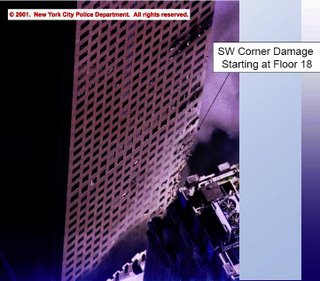
Yes, as you can see from the photo below, WTC 7 was severely damaged:
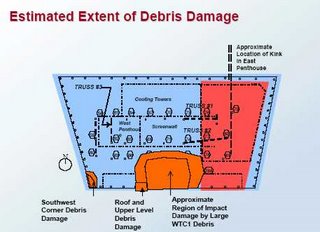
Here's a graphic estimate of how much of the building was actually damaged by the impact of Tower One:
I have not found a good picture of the south side of World Trade Center 7 prior to its collapse but after the collapse of the Twin Towers. But I think you can see that it was quite extensively damaged.
This is not a surprise when you look at this picture:
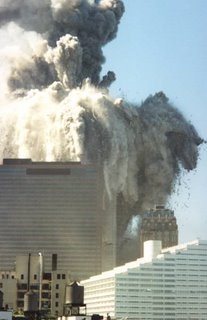
As you can see, WTC 7 is clearly in the debris field for the collapse of WTC 1; indeed in this picture it looks as though some debris cleared the WTC 7 building. Of course, as the North Tower continued to collapse, it would eventually be below the roofline of WTC #7, which would mean what? That's right, that the debris would be hitting the side of the building. Which side? Looking at the site map, it appears obvious that the south side of WTC #7 would sustain the most damage, especially the southwest corner.
Here are some looks at the fires raging in WTC 7:


Of course, again, these are pictures from the north side. Here's one I was able to obtain looking roughly east, which shows how much smoke is billowing out of WTC 7.

Did its collapse come as a complete surprise? Not according to accounts of firefighters at the scene:
Richard Banaciski of Ladder 22:
They told us to get out of there because they were worried about 7 World Trade Center, which is right behind it, coming down. We were up on the upper floors of the Verizon building looking at it. You could just see the whole bottom corner of the building was gone. We could look right out over to where the Trade Centers were because we were that high up. Looking over the smaller buildings. I just remember it was tremendous, tremendous fires going on.
Finally they pulled us out. They said all right, get out of that building because that 7, they were really worried about. They pulled us out of there and then they regrouped everybody on Vesey Street, between the water and West Street. They put everybody back in there.
Finally it did come down. From there - this is much later on in the day, because every day we were so worried about that building we didn't really want to get people close. They were trying to limit the amount of people that were in there. Finally it did come down. That's when they let the guys go in. I just remember we started searching around all the rigs.
Deputy Chief Peter Hayden:
Firehouse: Other people tell me that there were a lot of firefighters in the street who were visible, and they put out traffic cones to mark them off?
Hayden: Yeah. There was enough there and we were marking off. There were a lot of damaged apparatus there that were covered. We tried to get searches in those areas. By now, this is going on into the afternoon, and we were concerned about additional collapse, not only of the Marriott, because there was a good portion of the Marriott still standing, but also we were pretty sure that 7 World Trade Center would collapse. Early on, we saw a bulge in the southwest corner between floors 10 and 13, and we had put a transit on that and we were pretty sure she was going to collapse. You actually could see there was a visible bulge, it ran up about three floors. It came down about 5 o’clock in the afternoon, but by about 2 o’clock in the afternoon we realized this thing was going to collapse.
A transit is a surveyor's instrument; the idea here is that you fix its sight on an identifiable spot and then check it periodically to see if the building has moved at all. Incidentally, note that the fact that the fire department fixed a transit on the building undermines the claim that nobody expected the building to fall, because after all it was a steel building and none of those had ever collapsed.
By the way, that whole bit about WTC 7 collapsing neatly into its own footprint? Typical nonsense from the Loosers. Here's a picture of the damage to 30 West Broadway from the collapse of WTC 7:

Here's a picture of the damage to the Verizon Building from the collapse of WTC 7:

Here's the damage to the building adjacent to WTC 7 to the North (White building with terraced roof).

Incidentally, there were seven World Trade Center buildings in all; can you guess how many of them are still standing? Answer: Zero. Four buildings were destroyed on 9-11 (nobody ever mentions WTC 3, which was a 22-story building), and the other three (WTC 4-6) all partially collapsed and had to be demolished.
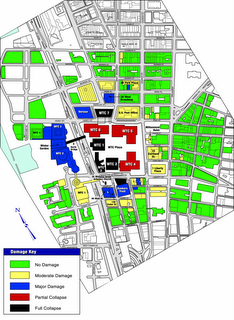
We also hear how far WTC 7 was from the WTC 1, but how many know even farther away buildings to the west suffered enormous damage? Here are the Winter Garden and World Financial Center #3:

You can see their relative positions here:
So we combine massive damage from the collapse of the North Tower, plus fires burning for hours with no attempts at firefighting, plus the fact that the fire department knew the building was doomed hours before it fell, and what's left for the CT crowd? Larry Silverstein's comment about "pulling" it.
The good news is that the rebuilding of WTC 7 was completed this week (no, Silverstein didn't take the money and run, he rebuilt):

First, let's take a look at WTC 7 as it looked prior to 9-11:

This shows the relative locations of the buildings:

When you hear that they were 300 feet apart, that sounds like quite a ways, until you remember how immense these buildings were. This photo (from the South Tower) should give you a better idea of the proximity:

How was the building damaged?
It was damaged largely by the collapse of World Trade Center 1 (the North Tower).
Was the building severely damaged?
Yes, as you can see from the photo below, WTC 7 was severely damaged:

Here's a graphic estimate of how much of the building was actually damaged by the impact of Tower One:

I have not found a good picture of the south side of World Trade Center 7 prior to its collapse but after the collapse of the Twin Towers. But I think you can see that it was quite extensively damaged.
This is not a surprise when you look at this picture:

As you can see, WTC 7 is clearly in the debris field for the collapse of WTC 1; indeed in this picture it looks as though some debris cleared the WTC 7 building. Of course, as the North Tower continued to collapse, it would eventually be below the roofline of WTC #7, which would mean what? That's right, that the debris would be hitting the side of the building. Which side? Looking at the site map, it appears obvious that the south side of WTC #7 would sustain the most damage, especially the southwest corner.
Here are some looks at the fires raging in WTC 7:


Of course, again, these are pictures from the north side. Here's one I was able to obtain looking roughly east, which shows how much smoke is billowing out of WTC 7.

Did its collapse come as a complete surprise? Not according to accounts of firefighters at the scene:
Richard Banaciski of Ladder 22:
They told us to get out of there because they were worried about 7 World Trade Center, which is right behind it, coming down. We were up on the upper floors of the Verizon building looking at it. You could just see the whole bottom corner of the building was gone. We could look right out over to where the Trade Centers were because we were that high up. Looking over the smaller buildings. I just remember it was tremendous, tremendous fires going on.
Finally they pulled us out. They said all right, get out of that building because that 7, they were really worried about. They pulled us out of there and then they regrouped everybody on Vesey Street, between the water and West Street. They put everybody back in there.
Finally it did come down. From there - this is much later on in the day, because every day we were so worried about that building we didn't really want to get people close. They were trying to limit the amount of people that were in there. Finally it did come down. That's when they let the guys go in. I just remember we started searching around all the rigs.
Deputy Chief Peter Hayden:
Firehouse: Other people tell me that there were a lot of firefighters in the street who were visible, and they put out traffic cones to mark them off?
Hayden: Yeah. There was enough there and we were marking off. There were a lot of damaged apparatus there that were covered. We tried to get searches in those areas. By now, this is going on into the afternoon, and we were concerned about additional collapse, not only of the Marriott, because there was a good portion of the Marriott still standing, but also we were pretty sure that 7 World Trade Center would collapse. Early on, we saw a bulge in the southwest corner between floors 10 and 13, and we had put a transit on that and we were pretty sure she was going to collapse. You actually could see there was a visible bulge, it ran up about three floors. It came down about 5 o’clock in the afternoon, but by about 2 o’clock in the afternoon we realized this thing was going to collapse.
A transit is a surveyor's instrument; the idea here is that you fix its sight on an identifiable spot and then check it periodically to see if the building has moved at all. Incidentally, note that the fact that the fire department fixed a transit on the building undermines the claim that nobody expected the building to fall, because after all it was a steel building and none of those had ever collapsed.
By the way, that whole bit about WTC 7 collapsing neatly into its own footprint? Typical nonsense from the Loosers. Here's a picture of the damage to 30 West Broadway from the collapse of WTC 7:

Here's a picture of the damage to the Verizon Building from the collapse of WTC 7:

Here's the damage to the building adjacent to WTC 7 to the North (White building with terraced roof).

Incidentally, there were seven World Trade Center buildings in all; can you guess how many of them are still standing? Answer: Zero. Four buildings were destroyed on 9-11 (nobody ever mentions WTC 3, which was a 22-story building), and the other three (WTC 4-6) all partially collapsed and had to be demolished.
We also hear how far WTC 7 was from the WTC 1, but how many know even farther away buildings to the west suffered enormous damage? Here are the Winter Garden and World Financial Center #3:

You can see their relative positions here:

So we combine massive damage from the collapse of the North Tower, plus fires burning for hours with no attempts at firefighting, plus the fact that the fire department knew the building was doomed hours before it fell, and what's left for the CT crowd? Larry Silverstein's comment about "pulling" it.
The good news is that the rebuilding of WTC 7 was completed this week (no, Silverstein didn't take the money and run, he rebuilt):

posted by Pat | 9:55 AM

0 Comments:
Post a Comment
<< Home